When we think about measuring the success of predator control, our minds often jump to native birds. After all, seeing or hearing more tūī, kererū, or toutouwai (Robin) feels like a clear sign that we’re making a difference. But birds aren’t always the best or easiest indicators of forest health. They can be elusive, move across wide areas, and their numbers fluctuate for reasons beyond our control. That’s why it’s just as important to pay attention to the plants beneath our feet and above our heads.
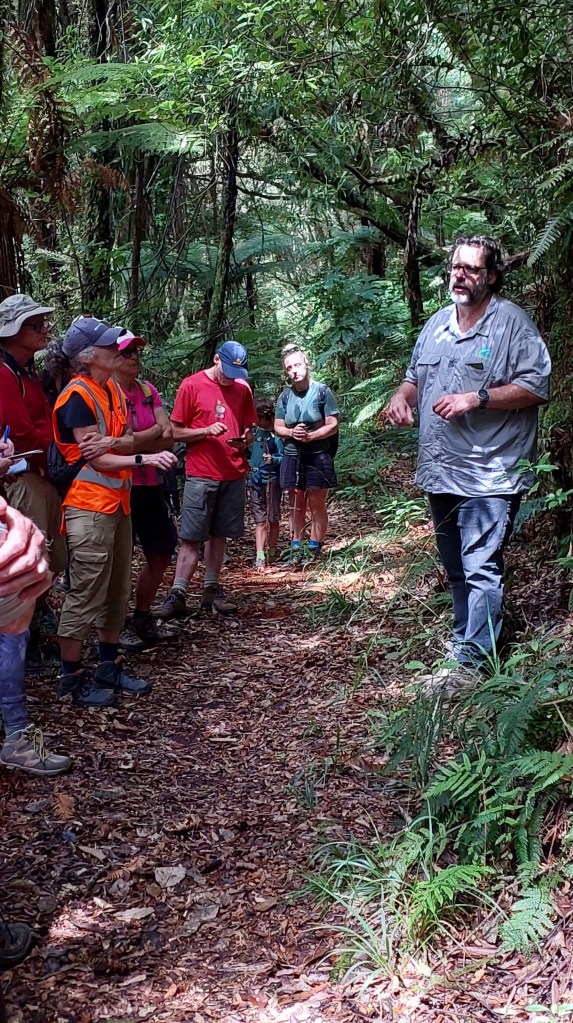
Wayne O’Keefe speaks to the group on the Friends of the Blade bush walk and talk, February 2025.
As BCA’s Wayne O’Keefe — an expert with over two decades of experience in environmental restoration, pest management, and vegetation health — told us in mid February 2025 on a two-hour walk around the Blade area, native plants tell a more consistent story. They stay put, grow slowly, and their condition directly reflects the pressure — or the absence of pressure — from browsing pests like possums, deer, and goats. By observing certain ‘indicator species,’ we can gauge how well the forest is recovering.
And the good news? According to Wayne, all signs indicate that our efforts are paying off. In the trapped areas we visited, Wayne pointed to healthy populations of key plant species that are especially vulnerable to browsing. Palatable trees and shrubs like māhoe, Pseudopanax (such as five-finger), and karamū are thriving.
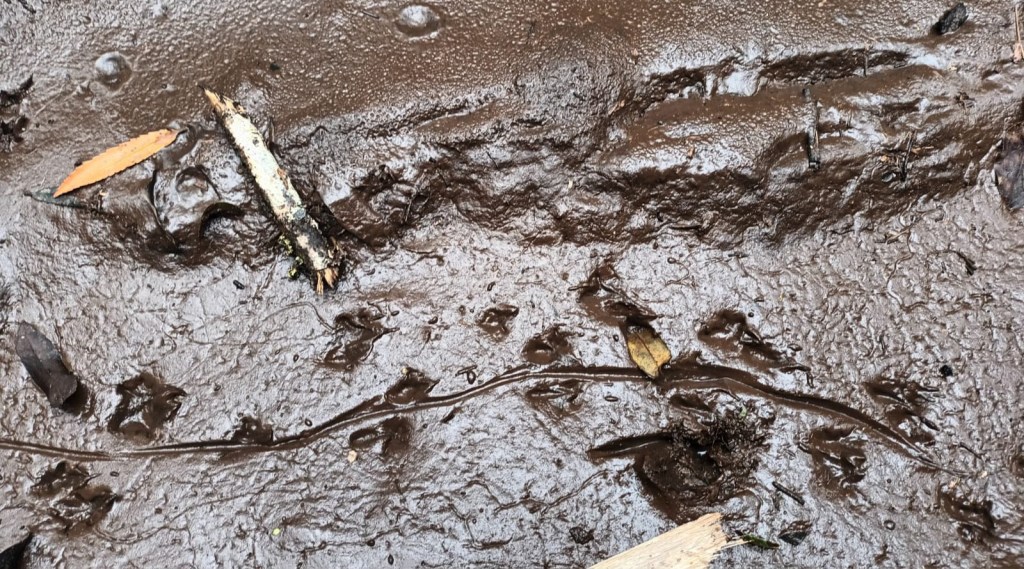
When I saw unusual tracks in soft mud out west of our trapping zone, near Line 18, I hoped it might be a forest gecko. I looked up all the images I could find of gecko tracks but could only find the marks they left on hard tracking cards. But I did find a wonderful thing — a herpetologist called Dr Dylan van Winkle who loves all things reptilian and froggy. He looked at my photos and decided, sadly for me, that it was a rat that made the tracks, after all.
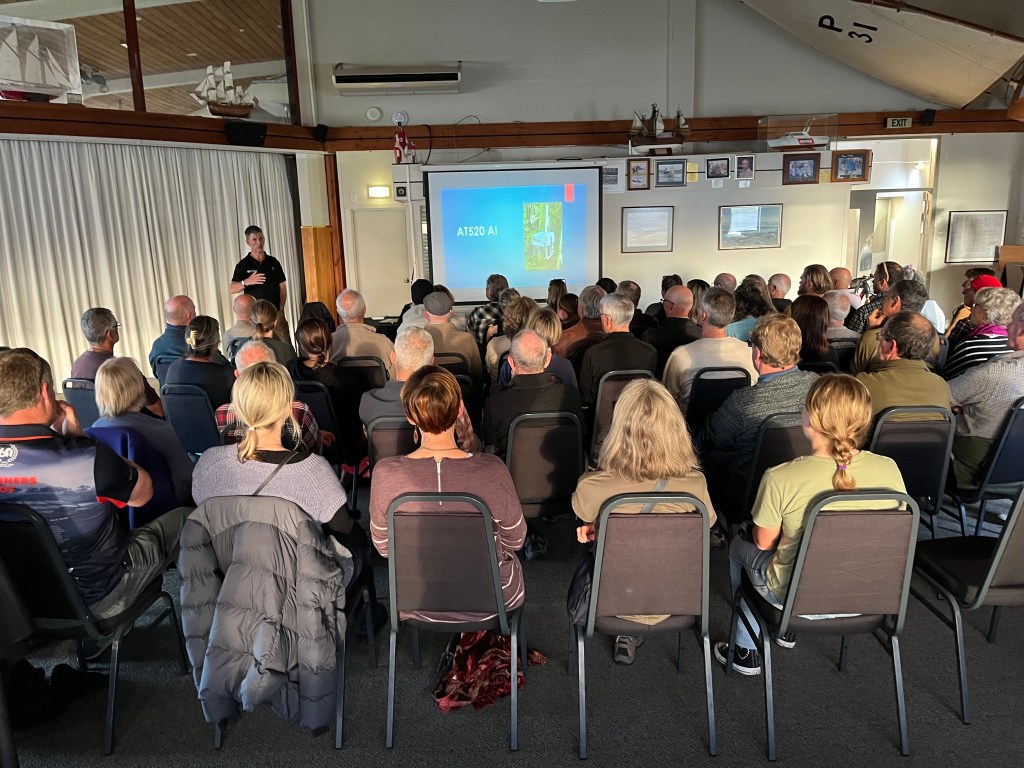
An enthusiastic crowd of trappers gathered at the Tauranga Yacht Club in the first week of October for a talk by predator control guru John Bissell of Backblocks Environmental Management, whose creative thinking and commitment to predator control never fails to inspire.
John Bissell speaking at Tauranga Yacht Club at an event organised by Bay Conservation Alliance. (Pic from BCA Facebook page)
There was something for every kind of predator control project in Bissell’s talk, which was organised by Bay Conservation Alliance, from creative lure ideas to high tech traps to frozen mice to attracting rats with walnuts.
The first part of the evening focused on new tech, beginning with the latest AI traps.
Friends of the Blade operates under the korowai of Whakamārama Community Incorporated, and every year we write up a report for their AGM of what we’ve been up to:
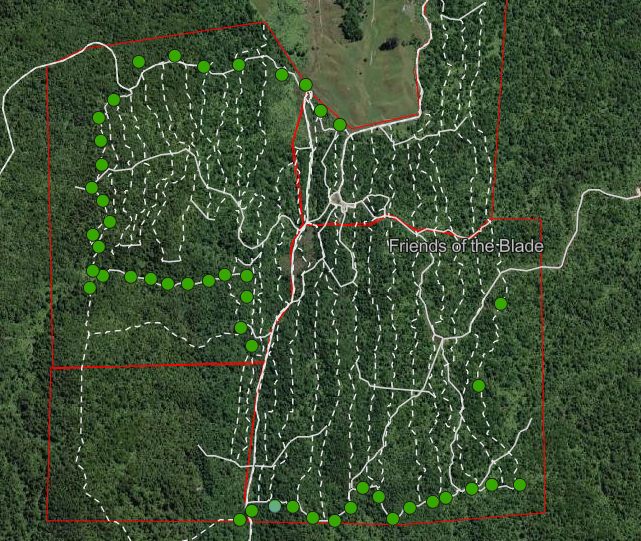
AT220 Autotrap Perimeter Completed 2023-24
As of April 2023, this was the status of our effort to ring fence our trapping area with AT220 auto traps — we were short of 20 traps to complete the eastern boundary. (The green dots are AT220s; the white dotted lines are our manual traplines checked fortnightly by our volunteers.)
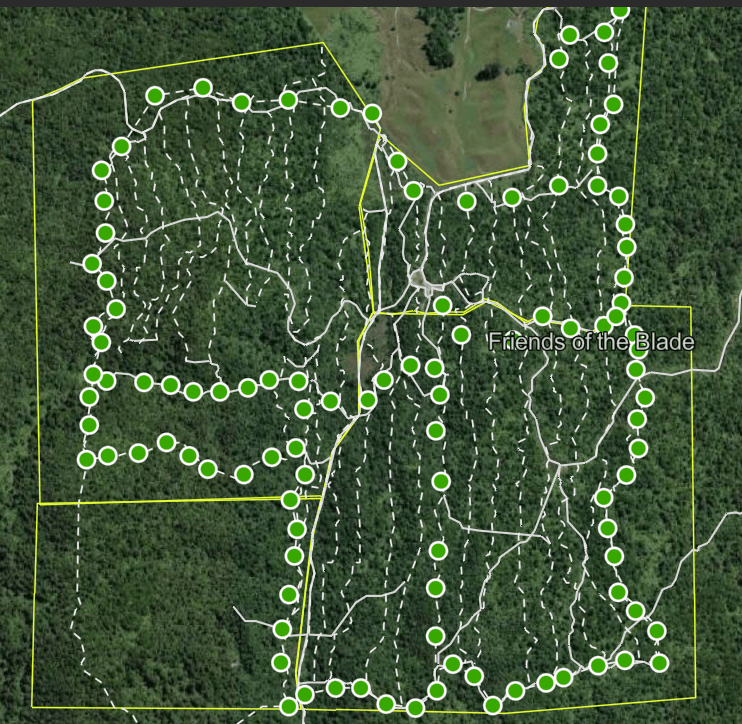
As of August 1, 2024, we had completed the perimeter and added a new line through the centre of our trapping area.
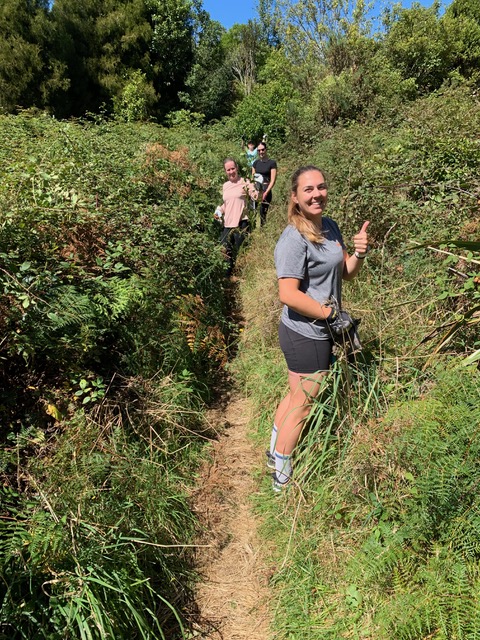
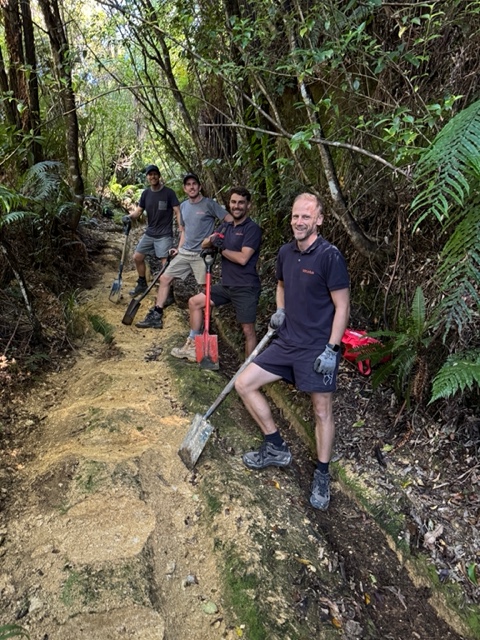
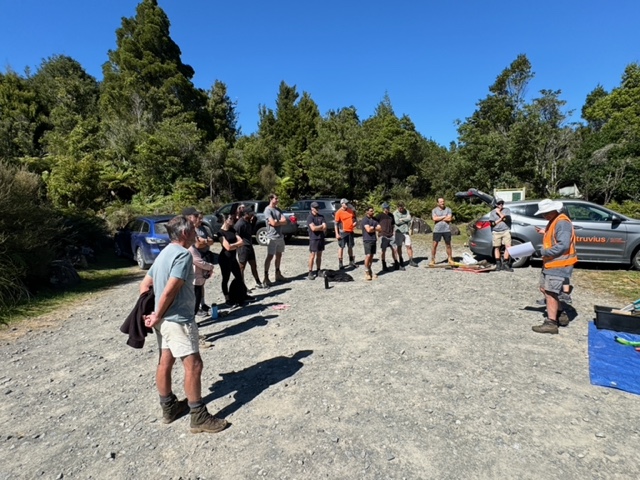
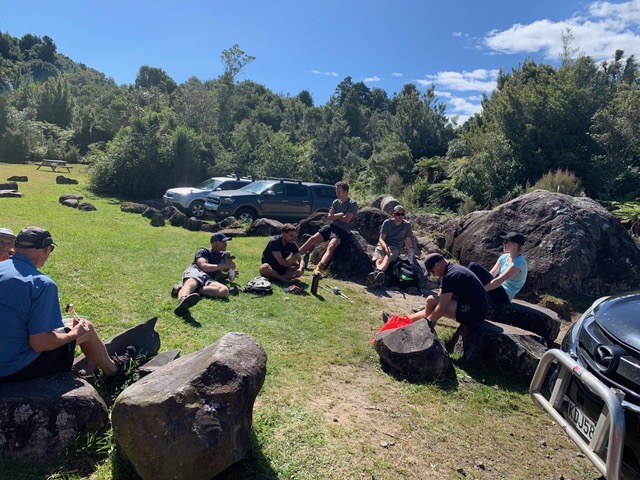
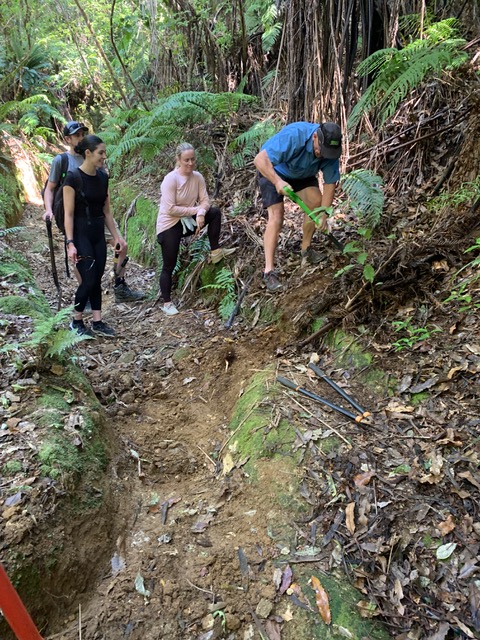
A huge shoutout to the 13-strong crew of volunteers from Tauranga offices of the engineering company Vitruvius who turned out on Thursday, 21 March, 2024, to tackle some of the maintenance work that we never seem to get on top of. We are so grateful for all their mahi!
• Steps were cut into steep and slippery sections of the ATV/4-WD track that leads up to/down from the plateau lines (8-17). Crew led by Stephen TJ • Blackberry cleared at start of Ngāmarama track; large mats of African club moss cleared from start of Pā Kererū walk (leading to Ngāmarama); pampas trimmed along part of of L6 through wetland. All-woman crew led by Alison • East-West access track (from Line 19-23) cleared. Crew led by Rolly. • Southeastern access track (to around ATS 22, 23) cleared. Crew led by Keith.
Envirohub’s ‘Sustainable Backyards’ organising team have pulled together a benefit gig to raise money for traps for our predator control work. Huge thanks to them for spearheading this — we’re very excited to take part, and hope all our readers, supporters and volunteers will spread the word, and come along. Here’s a link to the Envirohub event page, and the Facebook event link is here, if you’re that way inclined.
WHEN: Starting 4 p.m., Saturday 16 March WHERE: Astrolabe, 82 Maunganui Road, Mount Maunganui, 3116 TICKETS: $20, which donates a trap to Friends of the Blade. Click here to buy tickets.
Thank you all for your support, and see you there.
Readers of our newsletter (click here to subscribe) may recall from previous issues that since October of this year, volunteer Stu M has been trialing the use of canola cooking spray to keep his rat and possum traps free of rust and working smoothly.
Stu reports the trial is over and he considers it a success. As a result he will be spraying the steel mechanism of Victors each time they are set, the hinges on the Warrior traps, and the metal parts of DOC 200s and 250s, as well as a dash of oil as an attractant.
Stu’s initial plan was to spray the even numbered stations, both the rat and the possum traps, with the canola oil spray and run a comparison. But the trial got a bit skewed when, on cleaning and wire brushing all his Victor traps, Stu realised many were broken or failing and needed replacing with traps he’d already given a protective canola coating to. The other confounding factor was a change of lure during the trial.
Still, the kills tell the story, with Stu reporting an increase in the number of rats caught on his cleaned and sprayed Victors, as well as fewer empty but sprung traps.
His method is quick 1 to 2-second bursts of spray on each of the parts that need it.
As for the Warriors, using the canola oil on the hinges has loosened up the traps, which can then need re-calibrating. Sadly, this hasn’t helped with the problem most of us are having, which is Warrior corks being taken — likely by rats — without the trap being sprung.
Stu is running experiments on the triggers and the corks, and we’ll report back.
Wine Corks in Warriors
A big problem at the Blade, as noted above, is corks from our Warrior possum traps being taken by rats, possibly also birds. Just check out this trail cam segment below and you’ll see what we mean.
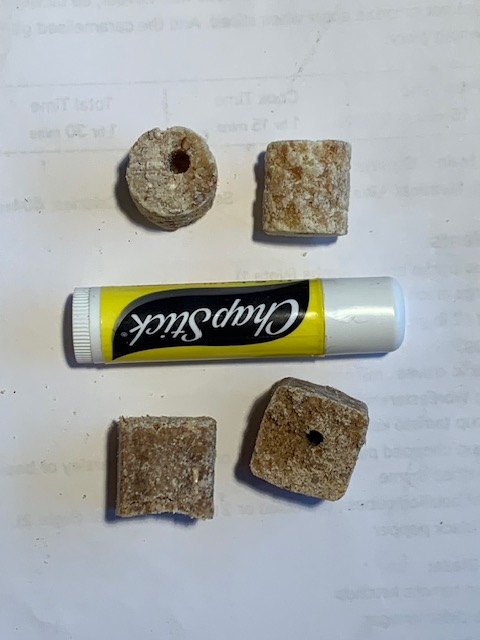
The problem got worse with the change of corks in 2022 from the round corks, which were less crumbly, to the current square corks, which tend to fall apart more easily.
Old Connovations corks at top; new square corks, cut in half, bottom.
When supplier Connovation stopped providing the round corks, Rolly decided to try a wine cork. He initially used one of the plastic corks, drilled a hole thru it, cut it in half, smeared it with green lure, and put it into a Warrior trap. On his first use, the only Warrior that caught a possum was one in which he’d deployed a wine cork.
Another advantage is that the wine cork was unscathed, so he could just put a touch of lure and reset the trap. Rolly has continued to deploy wine bottle corks, both the solid plastic ones and those made of traditional cork, with some success.
Enter the ‘Moosecork’
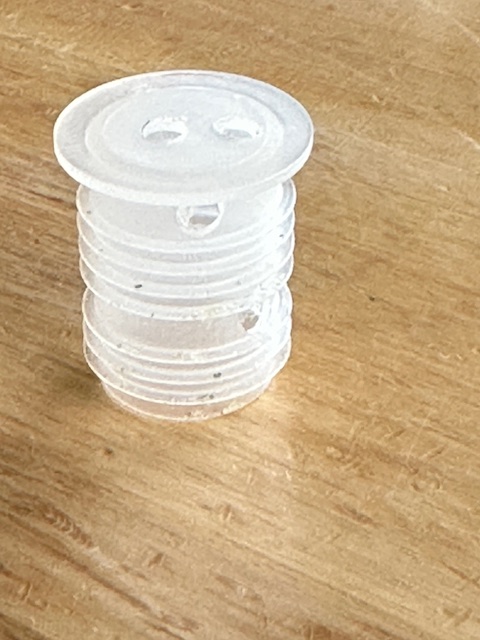
‘Moosecork’, with drilled holes, before deployment.
Named in honour of its inventor, Craig ‘Moose’ W, the Moosecork is still undergoing trials at the Blade, but is showing promise.
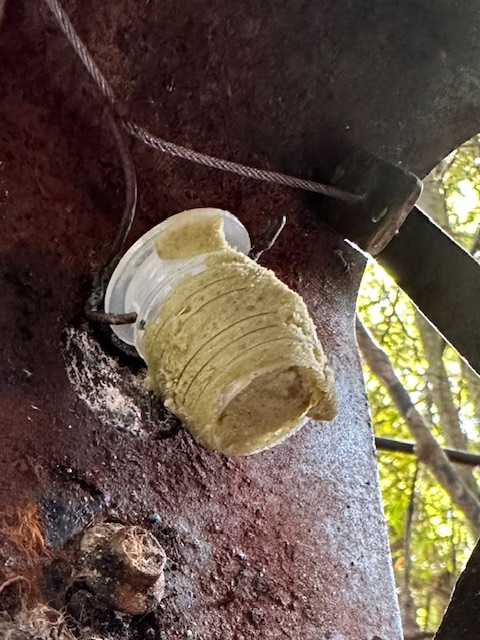
The ‘Moosecork’ is a plastic wine bottle stopper with a few holes drilled in it for mounting on the warrior wire & to also let the scent permeate. The logic is that a rat will struggle to get all the lure out before a possum gets a chance to have a go. You simply stuff the Ferafeed lure up into the inside of the stopper and smear a bit in the outside ridges. No need to remove the cork each time. (The Warrior trigger wire might need straightening a bit to get it all the way through but that’s very easy.)
Craig reports that some have been eaten by rats but about 70% (so far) have not been eaten inside 2 weeks.
‘Moosecork’ in place, in a Warrior trap, with lure.
On his line, Moosecorks had a 40% kill rate with possums the first 2 weeks in action in traps that hadn’t caught anything for months due to the corks being ratted.
Craig is looking at sourcing more Moosecorks, and we’ll keep volunteers informed.
The weather didn’t co-operate for our Open Day on 19 November, which was moved from the Department of Conservation carpark at the Blade indoors at the Whakamārama Community Hall.
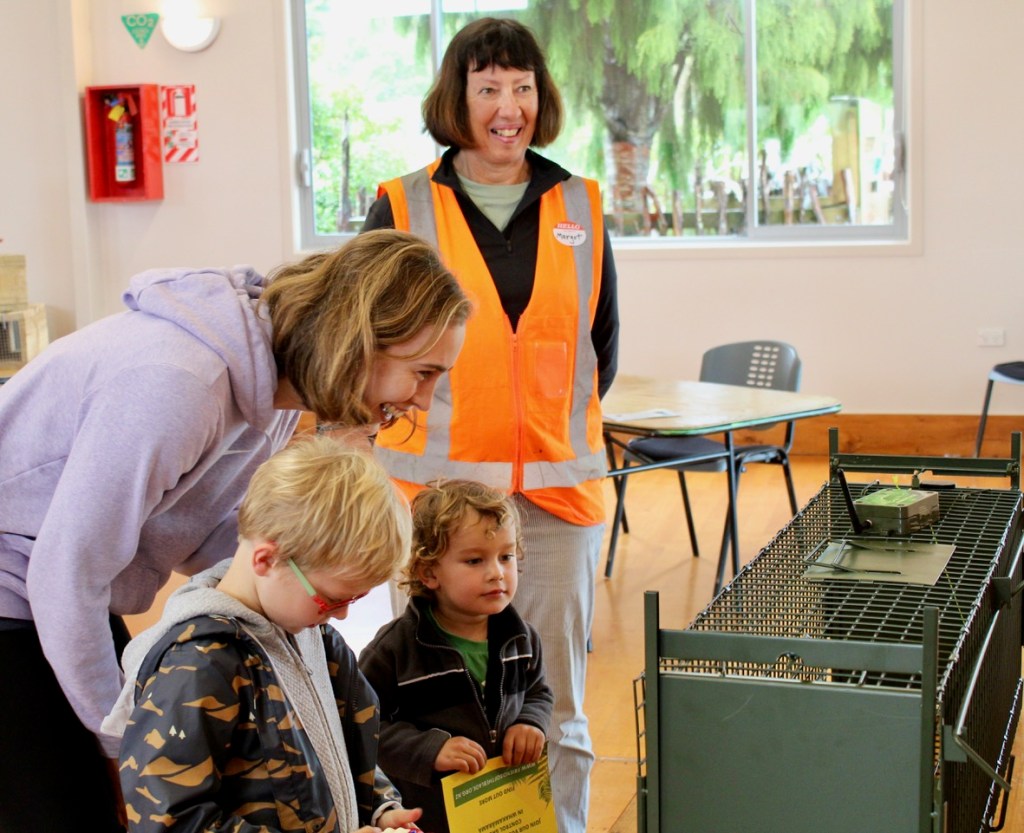
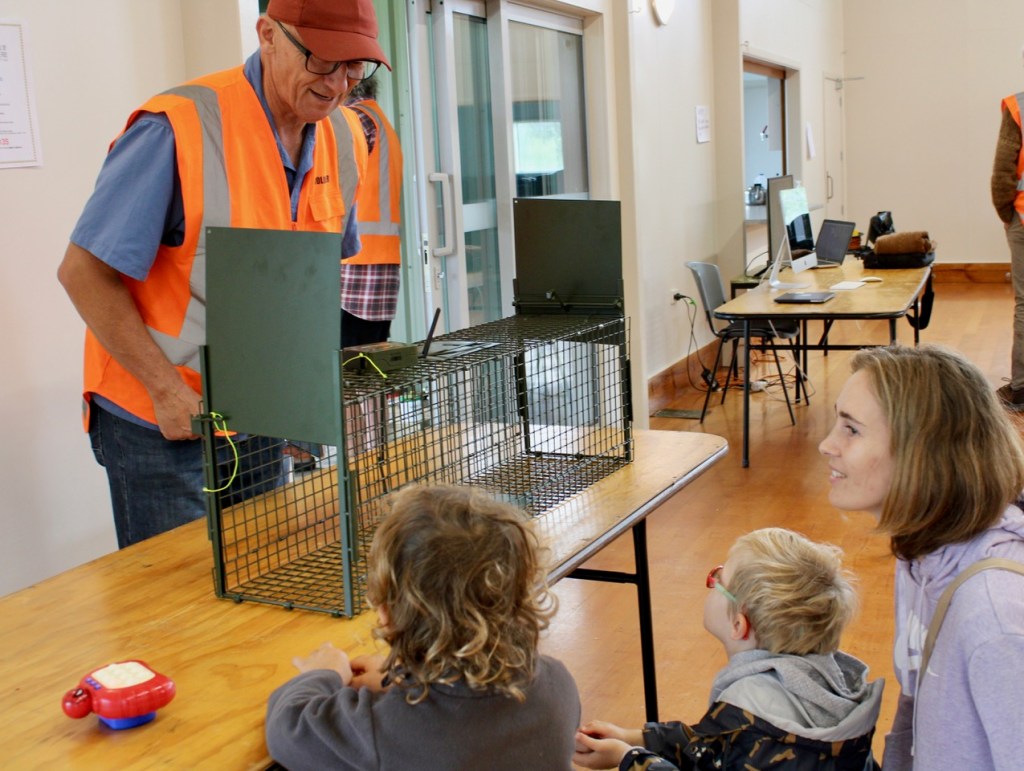
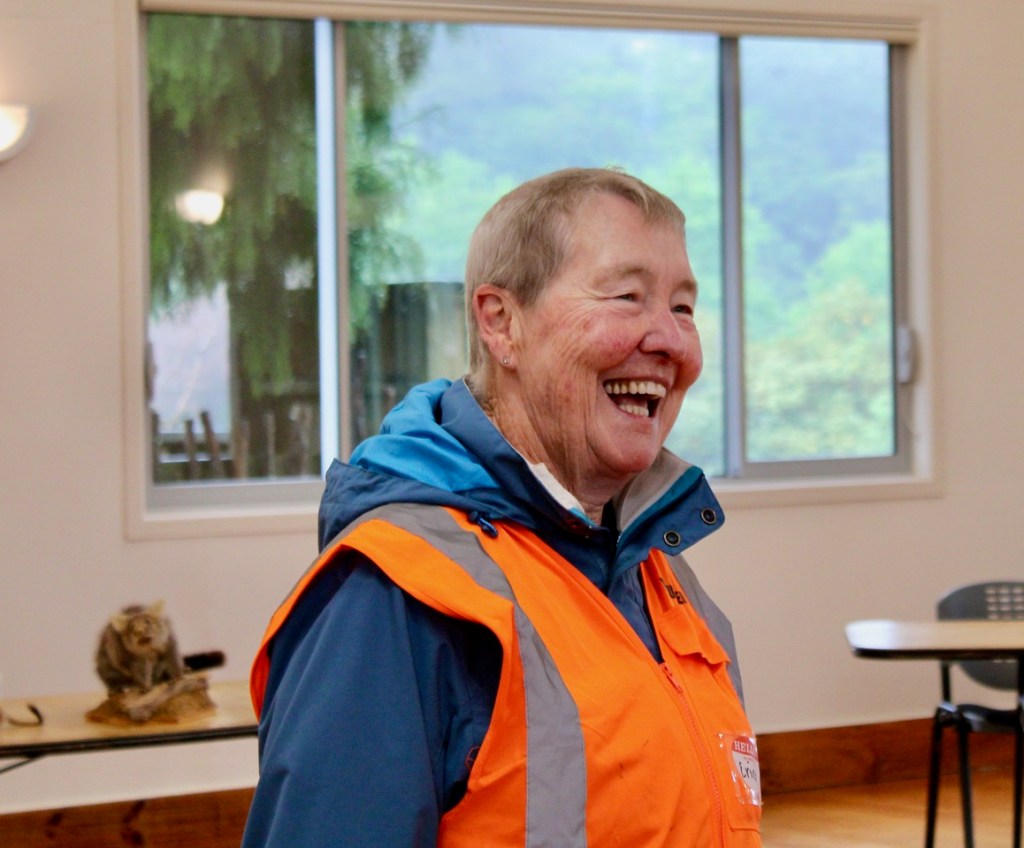
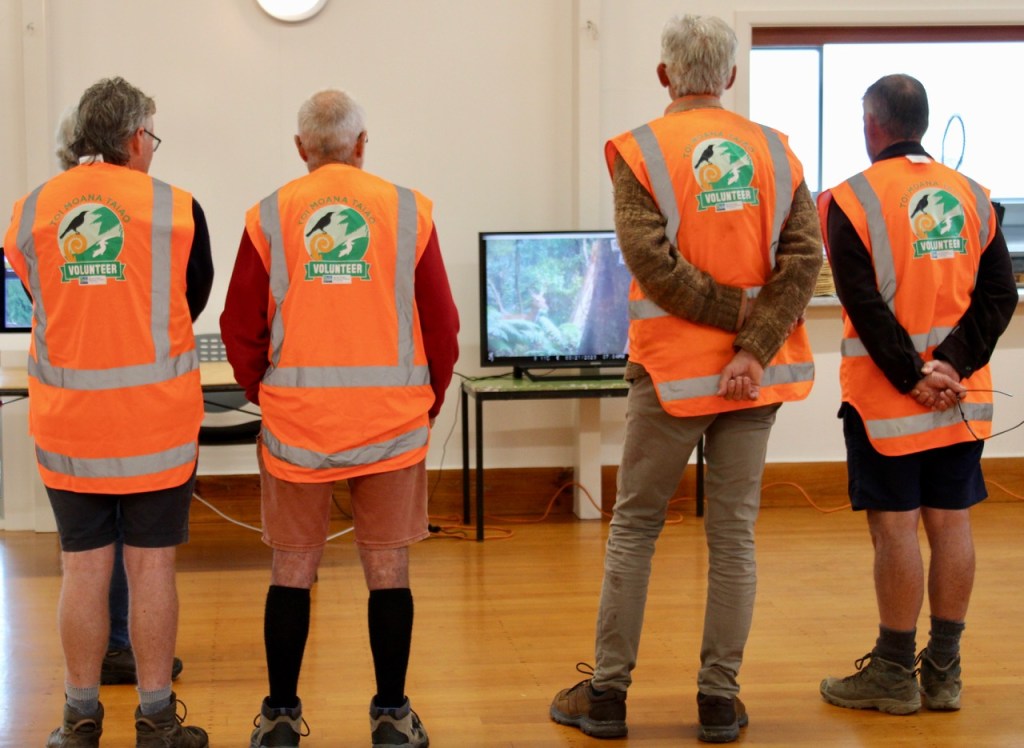
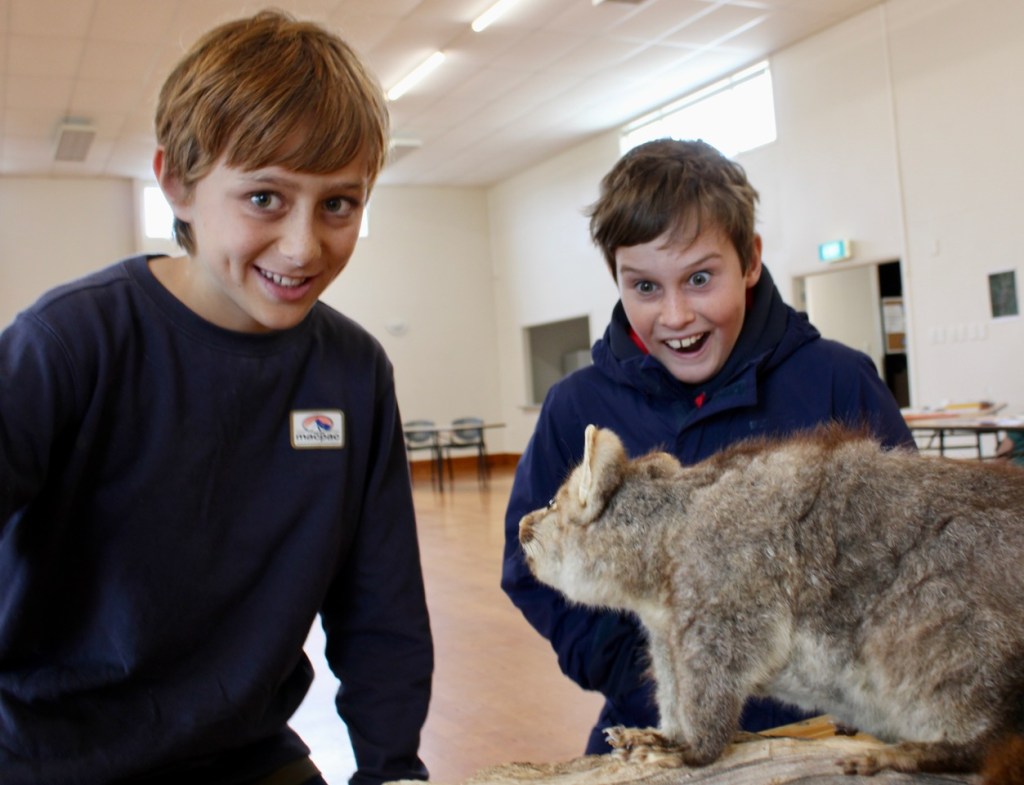
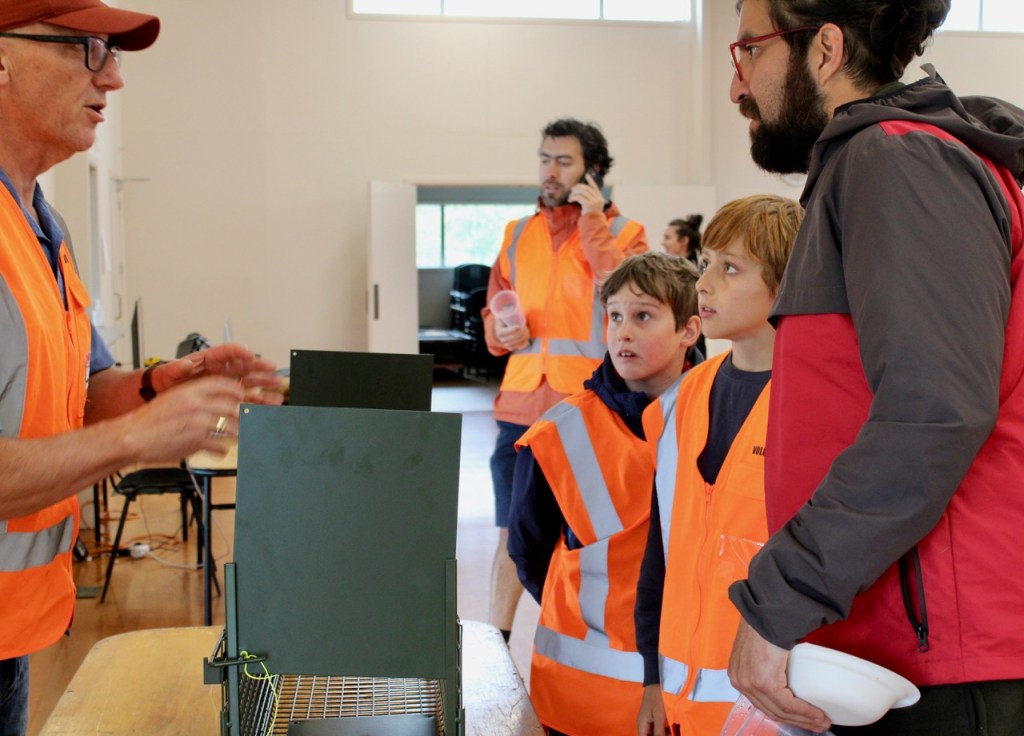
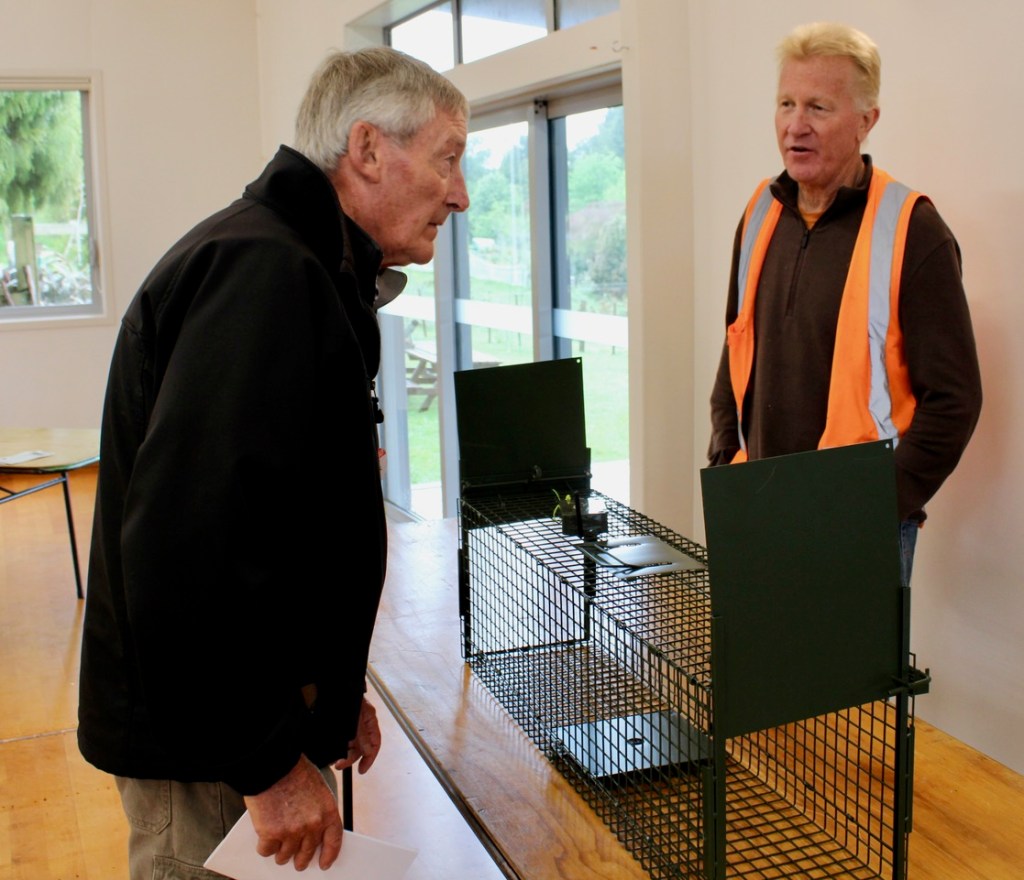
About 20 people visited our trap demos and info tables, watched our trailcam videos and enjoyed a sausage straight from the BBQ. Check out some photos from the day, taken by Noelene.
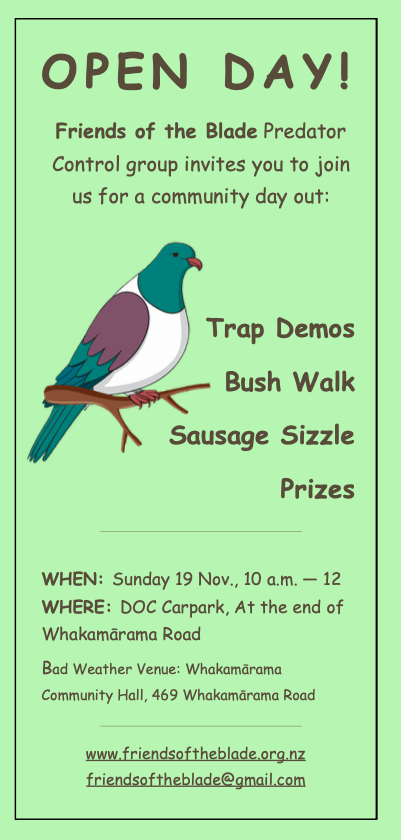
Friends of the Blade / Ngā Hoa o Pā Kererū predator control group invites you to join us for a community day out.
WHEN: Sunday, 19 November 2023, 10 a.m. – noon
WHERE: UPDATED SATURDAY 18 November. Because of the wet forecast, instead of outdoors, we are moving our Open Day to the Whakamārama Hall, 469 Whakamārama Road.
We’ll have trap demos and displays, a sausage sizzle, prizes, and a chance to find out more about our work, as well as join up. Sadly, we won’t be having the bush walks because of the weather. But you’re welcome to join us on one of our trapping days. Visit our Calendar to find out when we meet up.
One of the recommendations made in a recent Bay of Plenty Regional Council case study of our predator control efforts was to introduce a vegetation monitoring project to measure our forest health and diversity over time — specifically the impact of browsing predators (possum, deer & pigs).
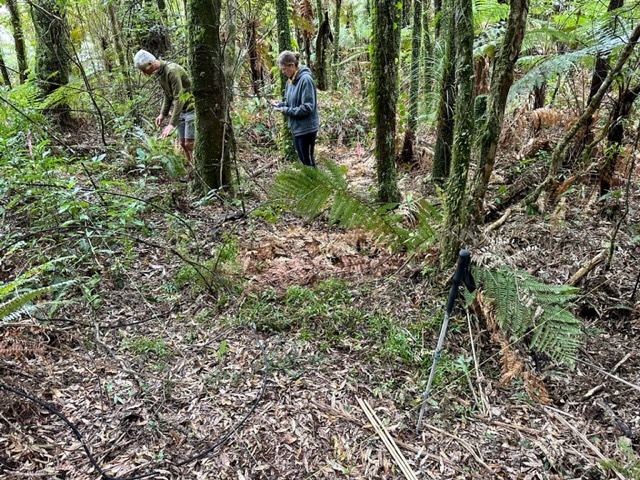
Two of our botanical enthusiasts Mike Tills and Philippa Howcroft attended a Bay Conservation Alliance training day back in March, and last Saturday — 7 October — established the first phase of this project by identifying two sampling areas, 5 metres x 5 metres of ‘representative vegetation’ (not swamp/wetland or fern groves, for example) locating one area within our trapping domain and the other comfortably outside.
The count required any plant between 30cm and 200cm tall be identified and counted. Both Mike and Philippa were very impressed with the overall diversity and health of vegetation within the general Friends of the Blade domain, with a large number of healthy seedlings visible throughout.
This indicates that both rats and browsing animals are under control, so we should all be very proud of that achievement. Eight different native species (51 total) of requisite size were identified in plot 1 and 13 (52 total) in plot 2. Of particular note was the prevalence of numerous ‘recruitment’ trees, that is, the next generation of significant trees such as tawa, miro and rimu. Stage two will be to return to these plots in 12 months’ time for a comparative count.



 Friends of the Blade