And It’s Good News
When we think about measuring the success of predator control, our minds often jump to native birds. After all, seeing or hearing more tūī, kererū, or toutouwai (Robin) feels like a clear sign that we’re making a difference. But birds aren’t always the best or easiest indicators of forest health. They can be elusive, move across wide areas, and their numbers fluctuate for reasons beyond our control. That’s why it’s just as important to pay attention to the plants beneath our feet and above our heads.
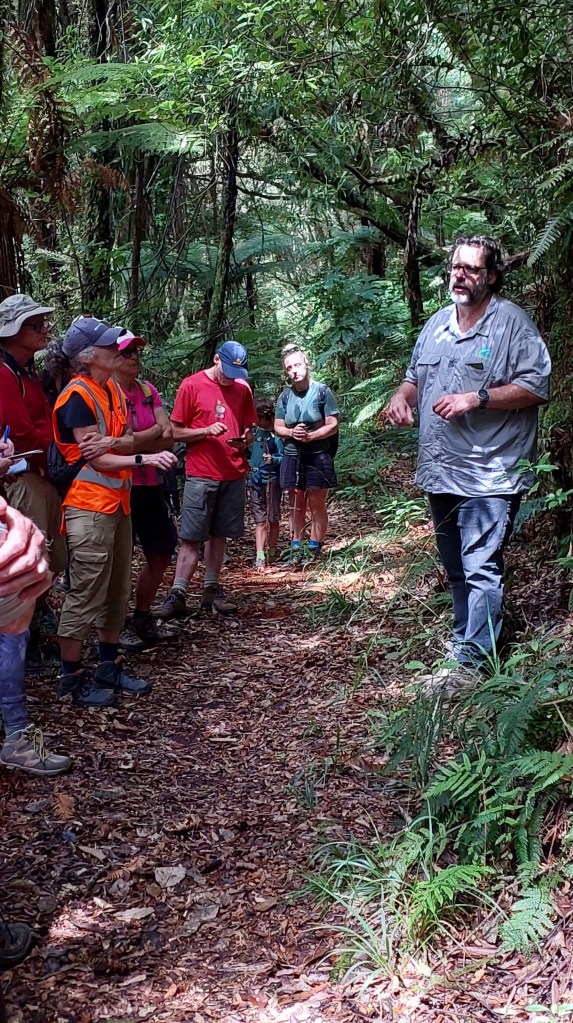
As BCA’s Wayne O’Keefe — an expert with over two decades of experience in environmental restoration, pest management, and vegetation health — told us in mid February 2025 on a two-hour walk around the Blade area, native plants tell a more consistent story. They stay put, grow slowly, and their condition directly reflects the pressure — or the absence of pressure — from browsing pests like possums, deer, and goats. By observing certain ‘indicator species,’ we can gauge how well the forest is recovering.
And the good news? According to Wayne, all signs indicate that our efforts are paying off. In the trapped areas we visited, Wayne pointed to healthy populations of key plant species that are especially vulnerable to browsing. Palatable trees and shrubs like māhoe, Pseudopanax (such as five-finger), and karamū are thriving.
We also saw delicate vine species like rātā flowering without signs of damage. This suggests that browsing pressure is low—an important marker of successful pest control.
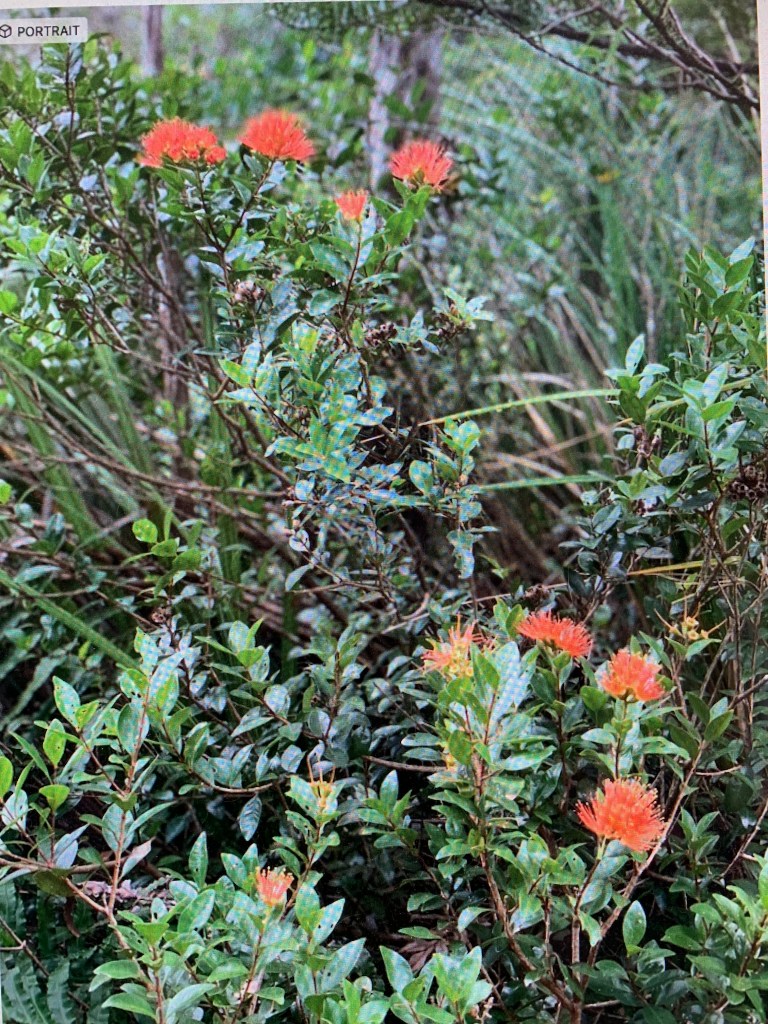
Even small details, like the appearance of new shoots, point to a forest that is not just surviving, but beginning to bounce back. Hopefully we will see successful growth from seedling into mature plants — the true measure of recovery.
These signs of regeneration are a direct reflection of the time and energy our volunteers put into predator control. Every trap checked and every pest removed helps ease the pressure on these ecosystems. The bush is responding—and that’s something worth celebrating.
What follows is a document focusing on plants in our area provided by Wayne (thanks Wayne!) to help us become more familiar with what’s going on in our bush, and even tailor our trapping type and location to what we see around us.
And if you’re not as good as Wayne at identifying native plants, we recommend downloading the “Aotearoa Species Classifier” app, which uses AI to instantly ID plants (and more) in the field, and once it’s on your phone, it works without connectivity.
Palatable New Zealand Native Plants as Indicators of Forest Health
By Wayne O’Keefe
Palatable native plant species are those that are vulnerable to being browsed by introduced mammals and as a result can disappear entirely from an ecosystem. They often provide essential food sources for birds and insects while also serving as indicators of a healthy, regenerating forest. Their presence often signifies a well-functioning ecosystem with suitable soil, moisture levels, and biodiversity. Their absence can mean that they are being impacted by browsing animals such as deer, goats, pigs, and possums.
Below is an overview of some key palatable native plants, that can be used as indicator species, including their appearance and preferred habitats.
Species Overview
Coprosma grandifolia (Kanono)
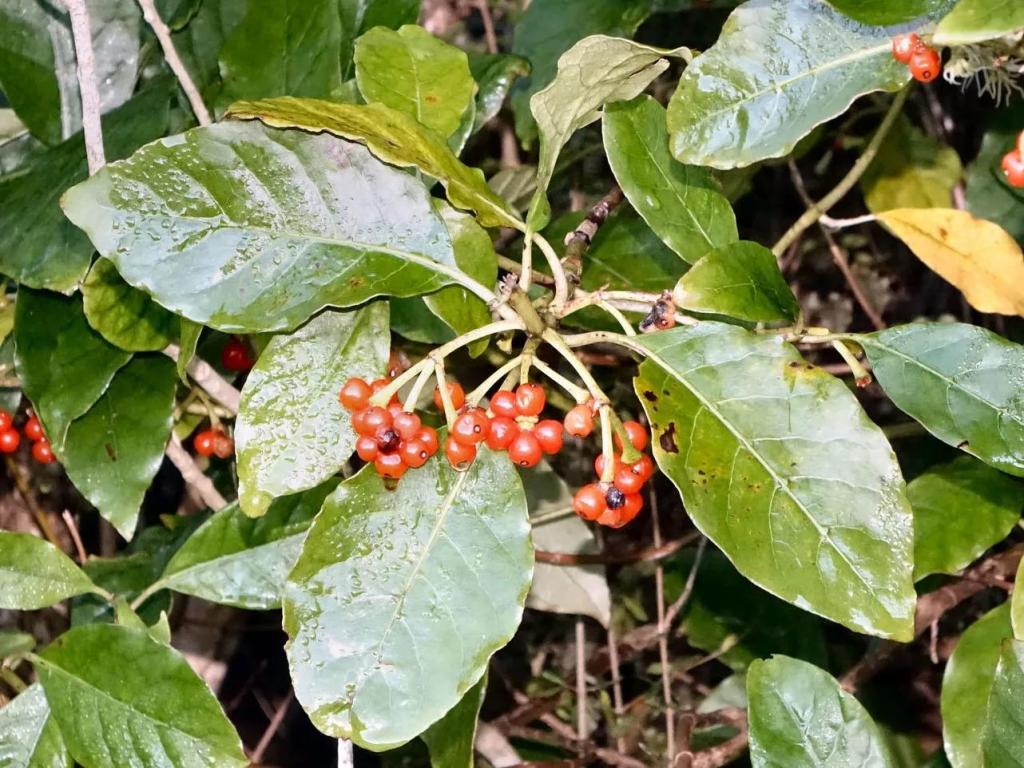
Appearance: A fast-growing shrub or small tree with large, glossy, oval-shaped leaves and distinctive pale-green veins. It produces small, orange-red berries that are highly attractive to birds.
Preferred Habitat: Found in lowland and montane forests, often in damp and shady areas. It thrives in well-drained soils and is commonly seen along forest margins.
Schefflera digitata (Pate)
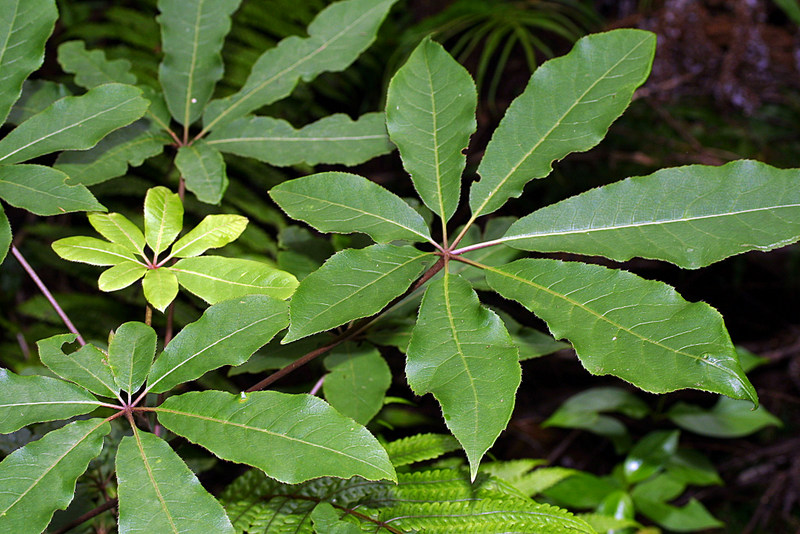
Appearance: A slender tree with soft, compound leaves divided into finger-like leaflets, giving it a unique, tropical look. It produces small greenish flowers followed by dark berries.
Preferred Habitat: Prefers damp, shady locations in lowland and montane forests. Common along stream edges and sheltered gullies.
Geniostoma rupestre (Hangehange)
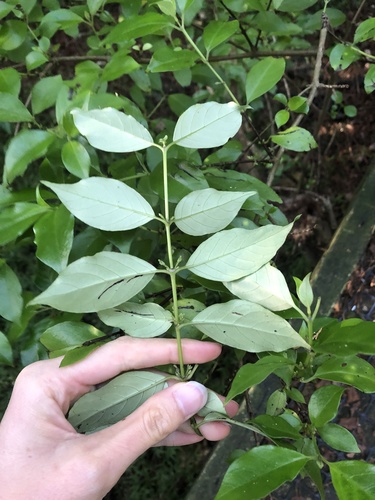
Appearance: A bushy shrub with small, shiny green leaves and clusters of tiny, greenish-white flowers. Its foliage has a strong, pleasant fragrance when crushed.
Preferred Habitat: Typically found in coastal and lowland forests, thriving in moist and shaded conditions, often on forest edges and regenerating bushland.
Pseudopanax arboreus (Five-finger/Whauwhaupaku)
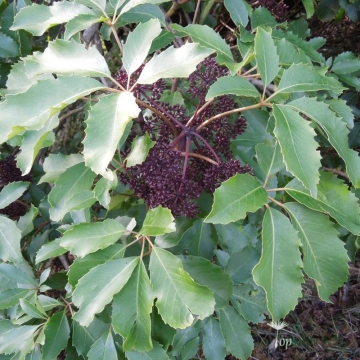
Appearance: A small tree with distinctive palmate leaves made up of five to seven glossy, dark green leaflets. It produces clusters of purple-black berries that attract birds.
Preferred Habitat: Grows in a range of environments, from coastal to montane forests, often in disturbed or regenerating areas.
Pseudopanax crassifolius (Lancewood/Horoeka)
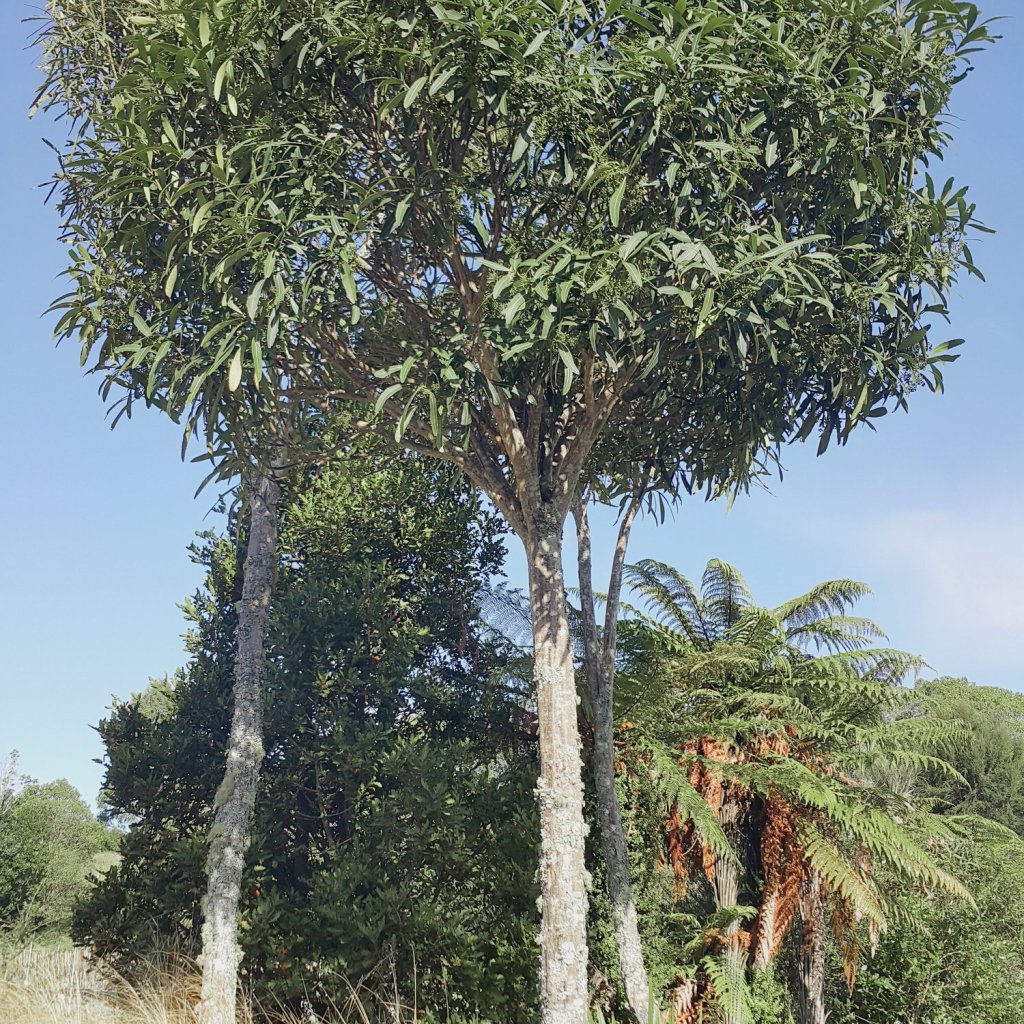
Appearance: Notable for its striking juvenile form, where long, narrow, serrated leaves point downward. As it matures, it develops a rounded canopy with broader leaves. Possums browse on lancewood leaves, especially when tender and supple. A trail covered in lancewood leaves is a sign of possum browsing.
Preferred Habitat: Found in a variety of forest types, from lowland to subalpine zones, often in well-drained soils. It is tolerant of dry and exposed conditions
Alseuosmia macrophylla (Toropapa/Karapapa)
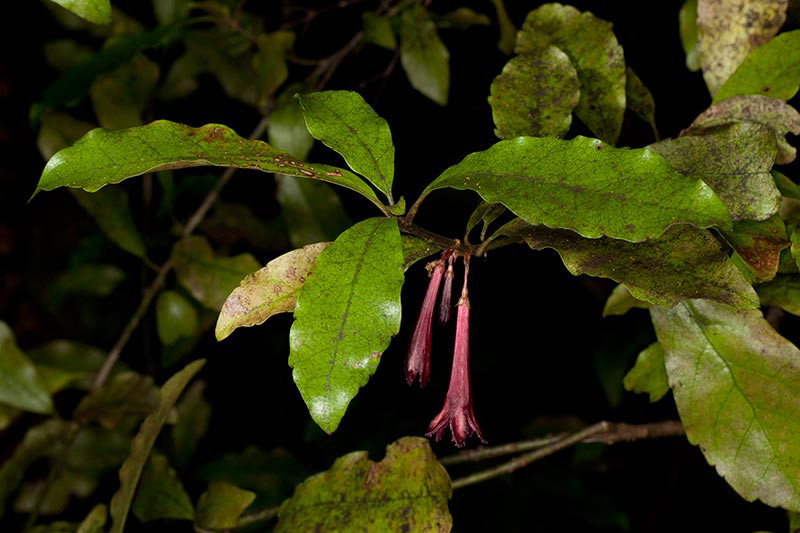
Appearance: A small shrub with large, leathery leaves and fragrant, tubular pink to red flowers that resemble those of native fuchsia.
Preferred Habitat: Thrives in shaded, damp forests, often in the understory of mixed broadleaf forests. Prefers well-drained, humus-rich soils.
Fuchsia excorticata (Kōtukutuku)
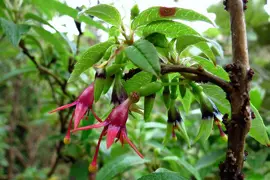
Appearance: A distinctive small tree with papery, peeling bark that ranges from orange to brown. Its flowers are tubular, changing color from greenish-yellow to deep purple as they mature. The nectar-rich flowers attract tūī and bellbirds, while the dark purple berries are an important food source for native birds.
Preferred Habitat: Commonly found in lowland and montane forests, especially in damp, sheltered areas such as gullies and stream banks. It thrives in fertile, well-drained soils and is often an indicator of a healthy, regenerating forest.
 Friends of the Blade