
An enthusiastic crowd of trappers gathered at the Tauranga Yacht Club in the first week of October for a talk by predator control guru John Bissell of Backblocks Environmental Management, whose creative thinking and commitment to predator control never fails to inspire.
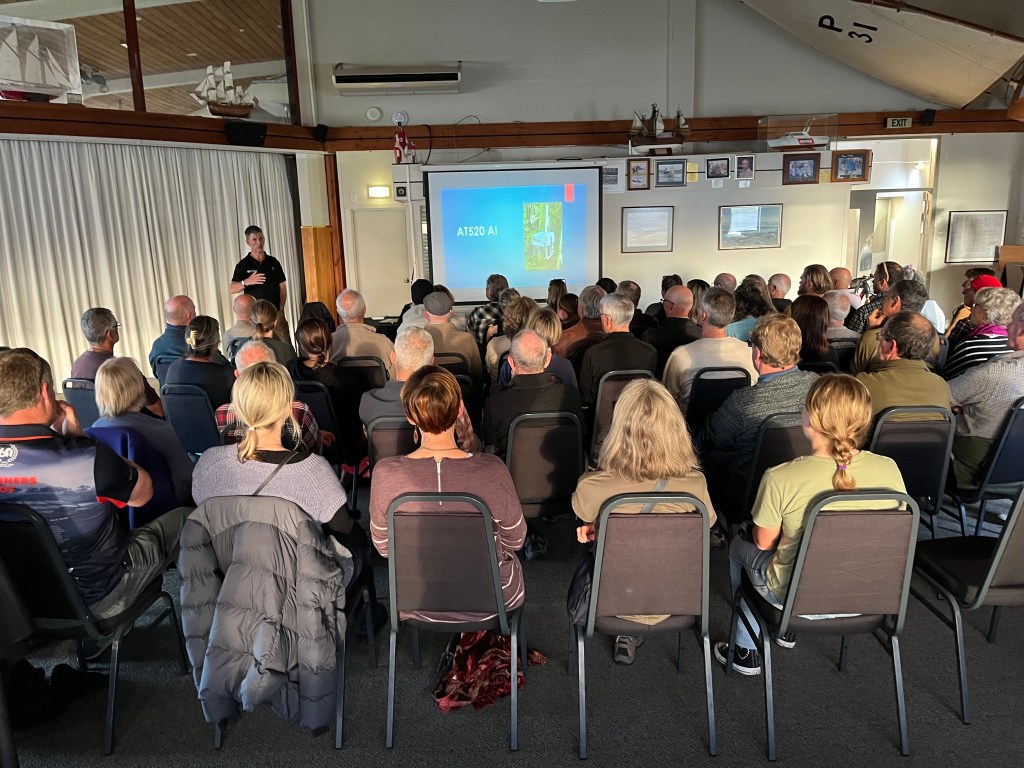
There was something for every kind of predator control project in Bissell’s talk, which was organised by Bay Conservation Alliance, from creative lure ideas to high tech traps to frozen mice to attracting rats with walnuts.
The first part of the evening focused on new tech, beginning with the latest AI traps.
AT520-AI
The AT 520-AI from NZ Autotraps is an AI trap with an AI-enabled camera for real-time species identification and precision targeting. AI image processing allows Species Selective Arming, protecting native and non-target species.
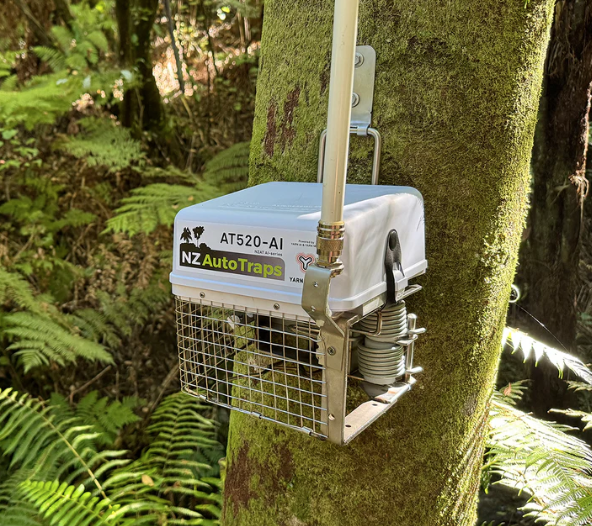
“We need AI massively especially in places where we have kea and weka,” Bissell said. He described the trap as a potential game changer, “and not just because of reducing the risk to non-target species, but what it basically means is suddenly we can throw the doors open on our trap entrances and know that it won’t go off with the wrong animal.”
“We’re working towards an AI cage trap that’s huge, that they just walk through, it recognises the animal, shuts, and sends you a message on your cellphone. Some of those traps are going to have an auto lure of different sorts” he said, which will reduce the amount of labour needed for use. “The bad news is that they’re going to be very expensive.”
Felixer Grooming Trap
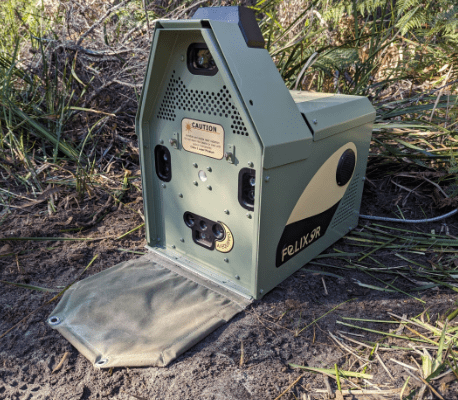
As an example of some of the clever tech that’s out there, Bissell spoke briefly about a trap targeting feral cats being used in Australia, known as the Felixer grooming trap.
“It’s like R2D2 in the bush. It recognises a feral cat with AI and it hits it with a jet of 1080 gel from 30 metres away,” Bissell said. The cat then grooms itself, and dies.
“That’s the good news. The bad news is, it’s $7,000.”
Critter Solutions AI
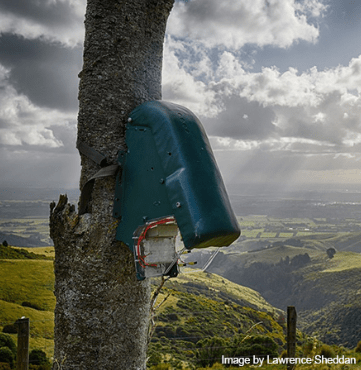
“Another one everyone’s talking about — Critter Solutions AI possum rat and stoat trap.” They are due to come out sometime this year, and “have real potential,” Bissell said.
These traps are described on Critter Solutions website as • preventing non-targeted species from being harmed; • featuring “Flexi-comms technology” that enables long-life or remote deployment; • offering safe and effective pest control in a ‘set-and-forget’ style, and • being fitted with its own automated lure dispenser.
Caution With New Tech
While Bissell has hopes for some of the AI driven tech, he advises caution nevertheless. “We should be very, very careful and somewhat skeptical of every new thing that’s offered in the market. There’s no guarantee that this will be the silver bullet. You will need to test it for yourselves in your own whenua and make sure that it’s going to work for you, make sure it is going to last mechanically long enough to justify the expense.”
He said a lot of predator control projects have been badly burned by fancy traps that were better at catching money than at catching animals. He advises testing a small number of any new tech or traps with trail cameras set to video so predator interactions and successful kills or catches can be monitored.
Thermal Imagers and Night Vision Gear
Bissell makes a lot of use of thermal gear in his work, which often involves hunting one apex predator that can’t be caught by regular trapping.
Using a long range finder scope with thermal imaging and a ballistic calculator, Bissell says he’s taking out feral cats at 500 yards at night. “You feel like you’re doing black ops when you’re out there with it.”
“The two things that have taught me the most about predators have been trail cameras and thermal gear, because they’re the only two things, most of the time, where you can observe them without them knowing they’re being observed.”
Possums
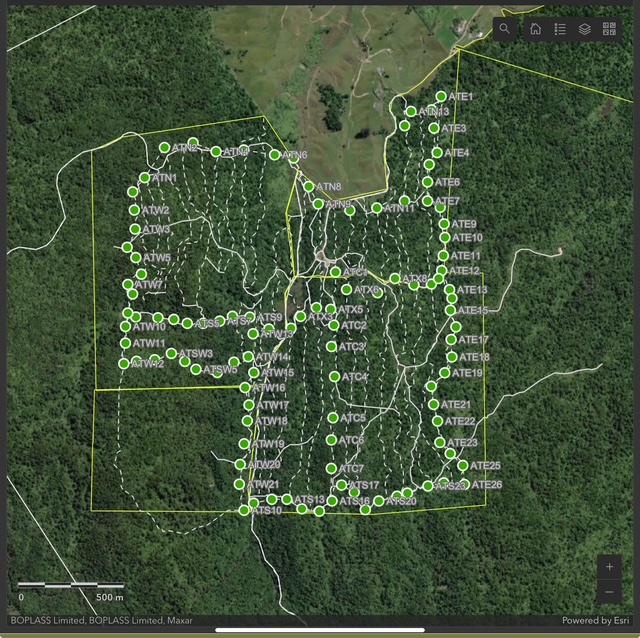
Bissell has a lot of praise for the AT220 trap, which Friends of the Blade has deployed right around our perimeter, with a limited number of the traps in the core interior zone. But he cautioned that trappers can be in too much of a hurry to deploy new tech without doing the proper preparation.
“These are a great trap, and you can set them and walk away and kill a bunch of possums, but what we should be talking about more is using the morphology of the species themselves, and the way they interact socially with each other, against them.”
Bissell advocates for a solid period of prefeeding before arming AT220s to kill.
“Quite often what I’m doing is I am putting the trap out there, unset, and I am throwing 20 kilos of old apples or carrots or something that’s cheap and nasty, and I put it at the site and I walk away for two or three weeks. And you want to see the squabbling that happens then.”

“When you get back, there’s big runs of possums coming in, not only that, they’re communicating while they’re feeding to all the others in the population. My estimate from some of the work I’ve been doing is that we are pulling possums from at least 500 yards to each trap,” Bissell said.
The prefeeding approach can work well, he said, if you have limited funding for AT220s, because you can rotate just a few of the traps through one area. For example, if the situation calls for it, he deploys an AT220 every 300 to 400 metres, and prefeeds two sites ahead, then just rotates the AT traps through the line.
Mustelids: Stoats, Ferrets, Weasels
As we know all too well, catching mustelids is not easy, and it turns out that males are much easier to trap than females. But catching a female stoat now, for example, prevents up to 12 kits being added to the stoat population later.
Bissell finds females easiest to trap when they’ve just weaned a litter. “I target young ferrets at dispersal, but I’m also targeting their mothers at the same time, and it’s the same with cats as with female stoats. I seem to catch the most females about that January February period,” he said.
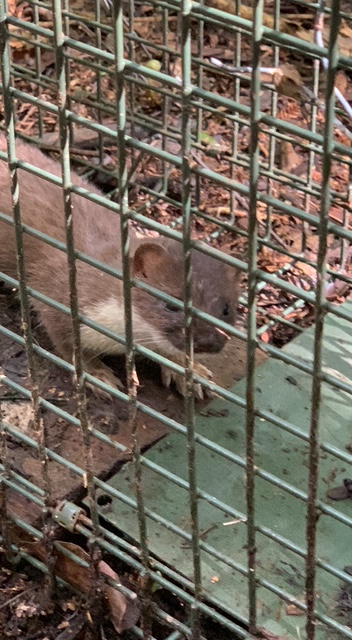
He has lots of tips and tricks for luring mustelids into DOC200 and DOC250 traps.
“Before I bait any of my DOC traps, I take a big chunk of meat that drips and bleeds, I rub it around the entrance of the mesh and I rub it just inside the vestibule. And sometimes I’ll use a blood scent trail out from the trap as well. Sometimes I’ll carry a rabbit, sometimes it’ll be a fresh dead ferret or a stoat on a string, I’ll pull it out of the bag and I’ll drag it away from the trap “
“Quite often if I catch a fresh ferret or a stoat I’ll rub its back end around inside the trap.”
While there are many lures for the creative trapper to choose from, Bissell says in New Zealand trappers tend to use only one type: “It’s generally dried or salted rabbit and maybe an egg and — god help us — a golf ball.” He says he personally doesn’t use salted baits, since nothing in nature is salted.
Fresh rabbit, or a freshly caught rat, mouse or mustelid is an excellent lure for DOC traps.
“Mouse scent is a really, really good scent for stoats,” Bissell said, going on to describe a couple of his one-of-a-kind approaches to mustelid lures. “I get a male mouse in a cage and I put cotton wool balls in the cage and the male mouse — they’ve got a very musky scent — they run all through it and they pee and poo, and you let them stink those cotton wool balls up, then you put them in your trap.”
“And the other thing I have done at times, like around our home in my haybarn, we get mice all the time and I set mouse traps, and when I catch a mouse I’ve got a bin in my bait freezer and I empty the mouse trap in there so I’ve got a bin full of frozen mice. Then I drill a hole or cut a slot in my DOC lid and I feed the tail up through that and gun staple it so the mouse swings.
“When it stops smelling really good, it’s dry and desiccated and swings really well, it’s a visual lure. So have fun, have a go.”
He also suggests setting rodent traps around DOC traps to try to prevent rats and even mice from clogging up traps that are targeting mustelids.
In keeping with his focus on preparation, and playing the long game, Bissell also takes a lot of time readying his new DOC traps before deploying them in the field.
“What we do is we stack them in a haybarn where there’s lots of mice, and then I buy lots of wheat or grain and I put them so the entranceway is pointing outwards. Then I walk along and I throw grain in the entrance and walk away for 3 or 4 weeks.
“While the traps are drying, all the mice are feeding in your DOC traps and laying scent trails all through your traps, and at the end of it, you have a trap that is both drier and lighter and stinks of rodents, you put it out there and you watch.”
Bissell Wisdom
Anyone who’s spent time with John Bissell has likely heard a few of his Bissellisms, from “Use big, bloody baits” (or “Bloody big baits”), “Cuddle them before you kill them”, “Recreate what is natural,” “Give them what they’re used to, but better than what they’ve got,” to perhaps the most important of them all, “Bad trapping is worse than no trapping.”
This one is tough for volunteer groups to adhere to, but it’s one of Bissell’s most oft-repeated pearls.

Quality trapping is worth much more than quantity, he says. “Give me 20 good traps over 200 average ones every day of the week.” Poor trapping educates predators to avoid traps, he explains, and leaves behind rats or stoats that will be very hard to catch. Which leads to another Bissellism: “It’s not what you catch that counts, it’s what you leave behind.”
“The big thing is to trap as best you can and give these animals no unpleasant experiences in your control regime. And the biggest one is snags and trap entrances, poorly set traps, traps that move, traps that are hidden … anything that might give them a bad experience.”
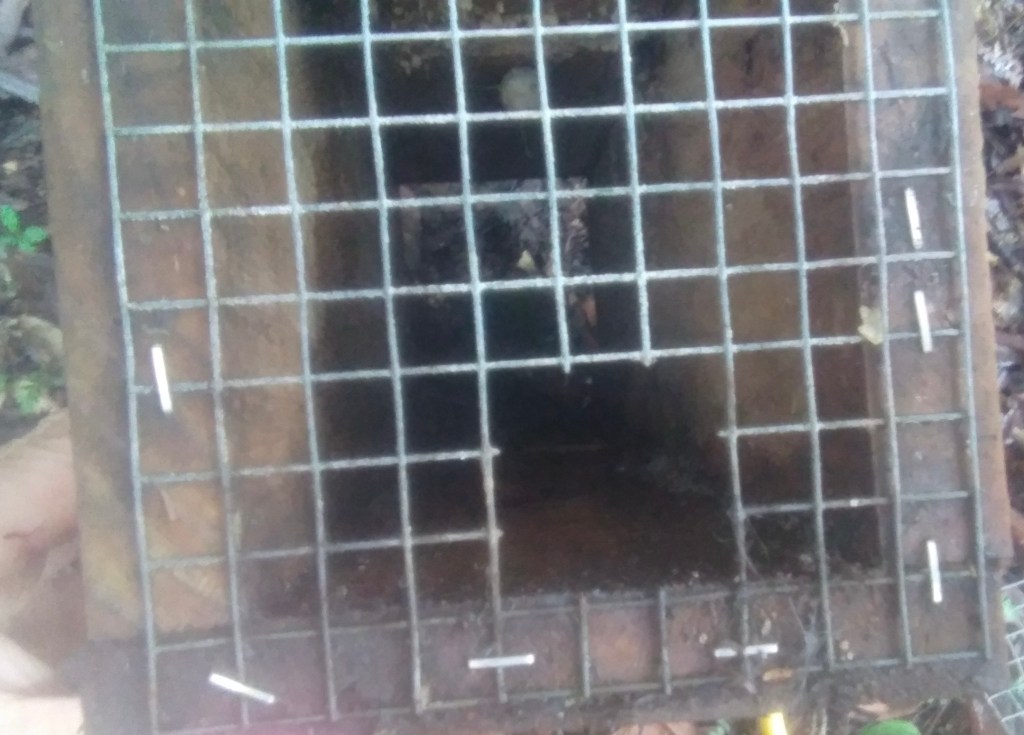
“If the trap is full of junk and cobwebs and slime and spines from the last hedgehog that went in there, all that sort of stuff, are they really going to be attracted to enter? Often they’re not.”
It’s something we all have to keep on top of. (Friends of the Blade volunteers, please check out our December 2023 newsletter for details on how to fix a rat box that has too small a mesh hole or snags.)
Bissell says he has caught, on trail camera, adult stoats and cats “beating their kittens away from DOC traps … teaching them to avoid this stuff before they have to encounter it themselves. These animals are seriously smart.”
Other Tips & Tricks
— Rats love walnuts. Try them in your trap, especially if your lure is being eaten by insects. Throw the walnut shells around the trap to bring the rats in.
— Moon phases/Maramataka: Hunting and trapping by moon phases is great, but Bissell says weather plays a bigger part. “You can have a rock star moon phase, but if it’s a crappy night, forget it.”
— To wear gloves or not to wear gloves?: “I don’t wear glvoes when I trap unless it’s something really manky, but what I do use is long nose pliers to do just about everything around my trap so I don’t handle bait per se that much, and certainly not dead animals. … The key is, nothing unnatural. Sunblock is a no-no, no lanolin, no WD40, nothing unnatural or synthetic.”
— Friends of the Blade’s Stephen TJ asked Bissell about AT220s next to untrapped bush attracting more more predators, which feed off the possum and rat carcases that drop from the ATs. “I’d be trapping around your AT220s,” Bissell said, “and baiting the traps with possum. … A doubleset DOC200 with a big chunk of possum in the middle is probably a really good place to start.”
— Friends of the Blade’s Margot McC asked how long before fresh rat or possum as a lure stops being attractive to target predators, and starts turning them off? Bissell said that from his experience, this can vary a lot. He has caught stoats with very manky bait. “Stoats particularly, I think, they get hangry if they don’t eat. … there are times when they almost have no choice but to investigate something because they are beside themselves with hunger.”
As for feral cats, a trial Bissell has been running shows cats will feed on a possum that has been dead at least a week.”
 Friends of the Blade