
Readers of our newsletter (click here to subscribe) may recall from previous issues that since October of this year, volunteer Stu M has been trialing the use of canola cooking spray to keep his rat and possum traps free of rust and working smoothly.
Stu reports the trial is over and he considers it a success. As a result he will be spraying the steel mechanism of Victors each time they are set, the hinges on the Warrior traps, and the metal parts of DOC 200s and 250s, as well as a dash of oil as an attractant.

Stu’s initial plan was to spray the even numbered stations, both the rat and the possum traps, with the canola oil spray and run a comparison. But the trial got a bit skewed when, on cleaning and wire brushing all his Victor traps, Stu realised many were broken or failing and needed replacing with traps he’d already given a protective canola coating to. The other confounding factor was a change of lure during the trial.
Still, the kills tell the story, with Stu reporting an increase in the number of rats caught on his cleaned and sprayed Victors, as well as fewer empty but sprung traps.
His method is quick 1 to 2-second bursts of spray on each of the parts that need it.
As for the Warriors, using the canola oil on the hinges has loosened up the traps, which can then need re-calibrating. Sadly, this hasn’t helped with the problem most of us are having, which is Warrior corks being taken — likely by rats — without the trap being sprung.
Stu is running experiments on the triggers and the corks, and we’ll report back.
Wine Corks in Warriors
A big problem at the Blade, as noted above, is corks from our Warrior possum traps being taken by rats, possibly also birds. Just check out this trail cam segment below and you’ll see what we mean.
The problem got worse with the change of corks in 2022 from the round corks, which were less crumbly, to the current square corks, which tend to fall apart more easily.
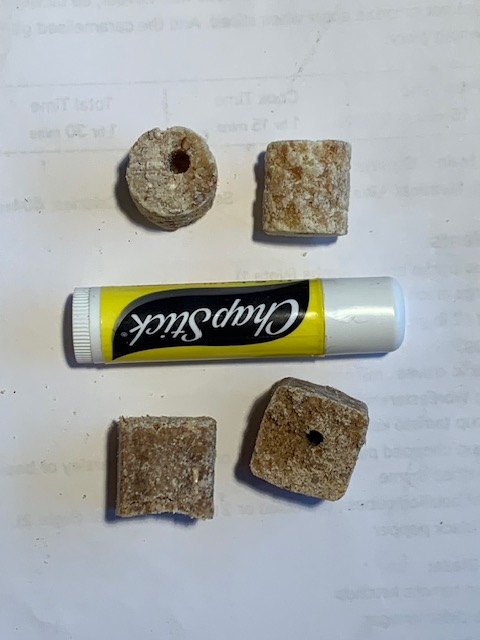
When supplier Connovation stopped providing the round corks, Rolly decided to try a wine cork. He initially used one of the plastic corks, drilled a hole thru it, cut it in half, smeared it with green lure, and put it into a Warrior trap. On his first use, the only Warrior that caught a possum was one in which he’d deployed a wine cork.
Another advantage is that the wine cork was unscathed, so he could just put a touch of lure and reset the trap. Rolly has continued to deploy wine bottle corks, both the solid plastic ones and those made of traditional cork, with some success.
Enter the ‘Moosecork’
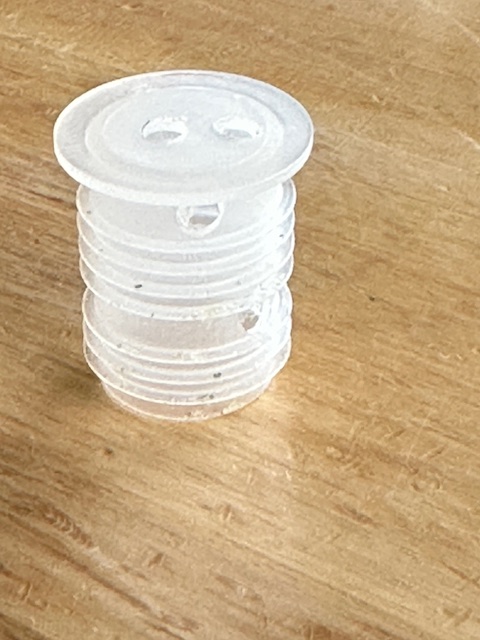
Named in honour of its inventor, Craig ‘Moose’ W, the Moosecork is still undergoing trials at the Blade, but is showing promise.
The ‘Moosecork’ is a plastic wine bottle stopper with a few holes drilled in it for mounting on the warrior wire & to also let the scent permeate. The logic is that a rat will struggle to get all the lure out before a possum gets a chance to have a go. You simply stuff the Ferafeed lure up into the inside of the stopper and smear a bit in the outside ridges. No need to remove the cork each time. (The Warrior trigger wire might need straightening a bit to get it all the way through but that’s very easy.)
Craig reports that some have been eaten by rats but about 70% (so far) have not been eaten inside 2 weeks.
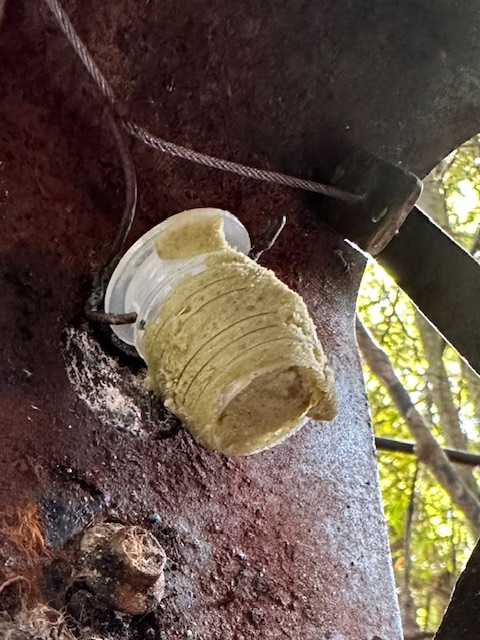
On his line, Moosecorks had a 40% kill rate with possums the first 2 weeks in action in traps that hadn’t caught anything for months due to the corks being ratted.
Craig is looking at sourcing more Moosecorks, and we’ll keep volunteers informed.
 Friends of the Blade